
AI is Coming to the Farm — That Can be a Good Thing
How artificial intelligence can fill labour shortages, solve food security and feed 9 billion people
AI is projected to revolutionize agriculture. AgTech — one of the most under-developed areas of AI — will, in about one to two years, become one of the most important areas of AI, on par with cybersecurity. Agricultural automation is critical to sustain food production in the face of massive global food security issues, starvation in Africa and an agricultural labour crisis caused by aging farmers and an aging population.
A $5 Trillion Industry Ripe for Disruption
Agriculture is a US$5 trillion industry, representing 10% of global consumer spending. Investment in agricultural technology startups was US$3.23 billion in 2016. While it is uncertain how much of that investment was in AI specifically, analysts have determined that US$363 million was invested in farm management software, sensors and the IoT — areas with significant AI overlap.
It is estimated that by 2020, over 75 million IoT devices for agriculture will be in use, and by 2050, the average farm will generate 4.1 million data points per day, up from 190,000 in 2014.
The agribot market is expected to grow to US$16.3 billion by 2020, up from US$817 million in 2013, encompassing growth in adaptive robots, autonomous navigation in fields, automated farm operations, computer vision and precision agriculture. Drones for farming alone are expected to reach US$2 billion, with some projecting that 80% of the commercial drone market will be dedicated to agriculture, adding approximately US$60 billion in economic activity.
Precision agriculture, which uses technology and big data analytics to optimize agricultural inputs for predictive AI, will be a US$4.55 billion market by 2020. Emerging markets are expected to see the fastest growth in precision AI for agriculture.
AI can facilitate large-scale farming production, processing, storage and distribution of agricultural goods more efficiently than humans. It can collect data about crops and be programmed to apply water, chemicals or fertilizers exactly when and where they are needed, while filling gaps in the agricultural labour force.
What Is Already Being Built
The range of AgTech development is impressive. Tech firms are working on satellites that monitor drought patterns, tractors that can detect and kill sick plants, and smartphone apps that identify what disease destroyed a crop — allowing for safer, better controlled and more tailored pesticide use. In the US, scientists developed an AI program with machine learning that can correctly identify crop diseases in 99.35% of cases, based on a catalogue of images from which it learns.
In the US, a company is developing a self-driving tractor and another is building farmbots that learn as they roam across farmland, using sensors to identify pests, diseases and weeds. The farmbots feed real-time crop data to computers, which analyze the data and recommend farming decisions based on their findings.
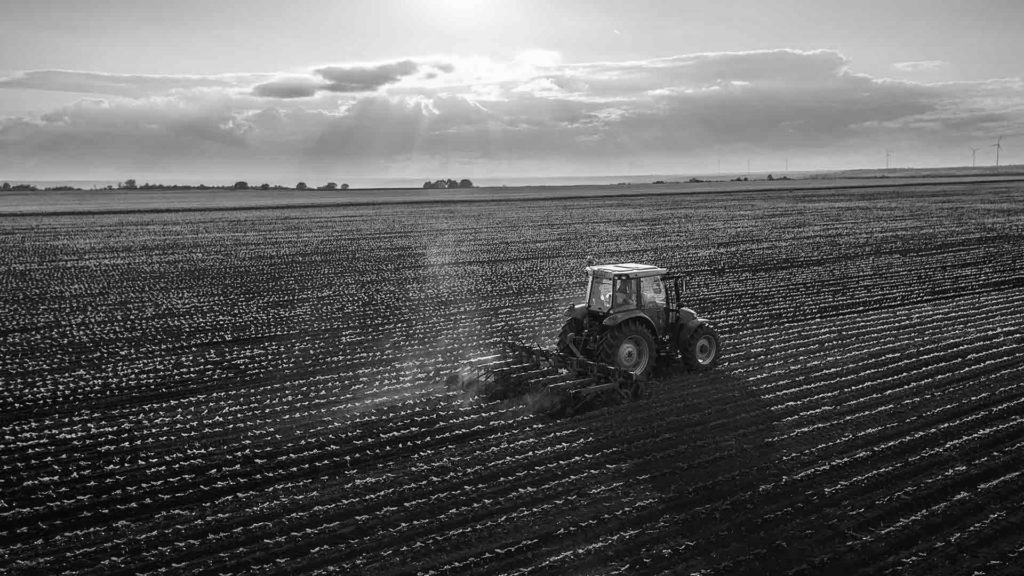
Blue River Technology, a US company, developed a tractor with machine learning capabilities that can photograph 5,000 plants a minute while driving through farm fields, identifying each sprout as lettuce or a weed and allowing farmers to make tailored decisions. Blue River was subsequently acquired by John Deere for $305 million. Some farmers are also using AI for pest control: PestID, a mobile app, can cross-analyze pictures of bugs or vermin taken in the field to identify the pest and recommend appropriate treatments.
In Australia, a startup named The Yield develops microclimate crop and aquaculture sensing systems that use sensors, models, AI and apps to help farmers make data-driven decisions about when to harvest, plant, feed and protect crops.
The Queensland University of Technology is building robots capable of performing manual agricultural tasks in orchards, such as fruit-picking, much faster than humans. Abundant Robotics is working to commercialize an apple-picking robot to reduce the $200 billion orchard farming industry’s reliance on seasonal labour that has not improved productivity in 20 years despite yield increases.
From Cows to Crops: AI Across the Farm
Entrepreneurs, especially in the US, are finding creative ways to apply AI to food production and processing. Cainthus, a machine vision company based in San Francisco and Ottawa, uses facial recognition technology for cows, identifying individual animals by their facial features in six seconds and allowing farmers to monitor livestock quickly with minimal human interaction.
FarmView, an initiative at Carnegie Mellon University, is combining sensors, robotics and AI to create mobile field robots that improve plant breeding and crop management. FarmView’s robots gather data from fields to help farmers make management decisions and grow more abundant, higher-quality food with fewer resources. Carnegie Mellon is also developing AI for plant breeding, combining robotically gathered plant phenotype data with genetic and environmental data through machine learning to accelerate the breeding process and select desirable traits such as yield and disease resistance.
New Jersey-based Bowery launched a vertical farming business that uses automation, machine learning and vision systems to monitor and tend to crops at the retail level. Its AI systems draw data from a network of sensors measuring variables impacting plant growth, using cameras and computer vision to detect changes in plants and correlate them against factors like humidity and temperature to adjust the drivers of plant health, taste and quality.
Farmnote, a Japanese startup, developed a wearable device attached around a cow’s neck that gathers real-time data about the animal’s activity and sends mobile alerts to farmers when cows are unwell, roaming, ovulating or giving birth.
AI, Finance and the African Farmer
FarmDrive, a Kenyan data analytics startup, helps small farmers in Africa access credit from local banks by generating credit scores using data inputs from farmers combined with satellite, agronomic and local economic datasets. It is also developing decision-making tools for financial institutions to create financial products suited to small farmers, such as tailoring loan repayments to match harvest yields. By 2020, FarmDrive had unlocked over US$10 million in loans for more than 100,000 Kenyan smallholder farmers.
Agricultural equipment giant John Deere funds an AgTech accelerator to support entrepreneurs who have an idea, intellectual property or a prototype for agricultural innovation, providing seed funding and mentoring through strategic corporate partnerships.
The Real Prize: Food Security
The most important application of AgTech is food security. With a global population expected to reach 9 billion by 2050, agricultural production must rise by 70% to meet human food needs. Food security could be achieved with investments in AI and innovative ecosystems to improve yield, better manage food production and improve global food distribution logistics — providing security for the 108 million people suffering from crisis-level food insecurity, exacerbated by protracted wars and record staple food prices, especially in Africa and the Middle East.
Canada is a case in point with significant potential for AI leadership in agriculture, if government agencies provide grants to startups. In Ontario alone, the agri-food sector adds $36.4 billion to the province’s economy and supports 800,000 jobs, surpassing the financial services sector in economic importance. Canada’s agricultural labour shortage will reach 113,800 jobs by 2025 due to an aging workforce and the rural location of farms. Even Canada has pockets of severe food insecurity equal to those in Africa: 48% of indigenous living on a reserve in Ontario experience severe food insecurity.
The Bottom Line
AI represents a key way to fill labour shortages and provide smarter agricultural management that can solve food security and save lives. The opportunity is sitting in the field, waiting. The only question is whether governments and investors are smart enough to go pick it.